
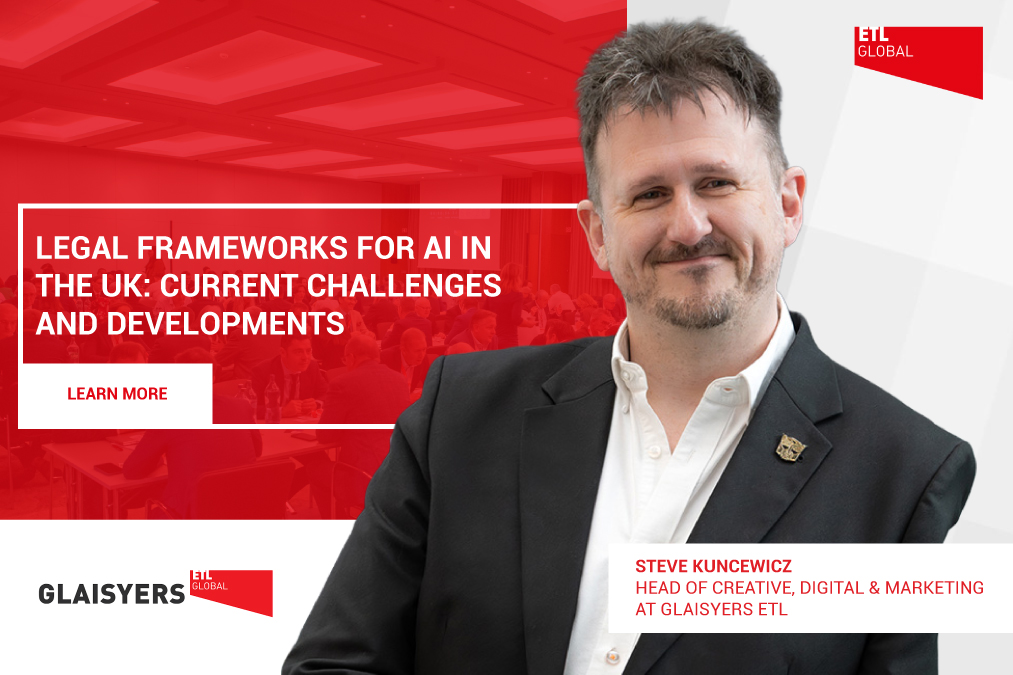
As artificial intelligence systems become more advanced, the legal foundations supporting their use keep being tested. In the UK, the decision not to create AI-specific legislation has placed increasing pressure on regulators, courts, and businesses to interpret how existing legal principles apply to technologies that learn, adapt, and act independently.

In its latest paper, AI, Alignment, and Accountability, Glaisyers ETL explores the legal questions raised by modern AI, from how to assign responsibility when outcomes can’t be traced to a single human decision, to whether AI systems should eventually be given legal “personality.” The report also reviews current legal disputes involving copyright, data use, and transparency, highlighting how the existing rules are being applied in practice.

Read the full article to explore how legal thinking is adapting to AI and what that means for your organisation.

ETL GLOBAL

Follow & Subscribe

SEARCH THIS BLOG

OTHER POSTS YOU CAN'T MISS

VAT in Norway: Key Points for Foreign Businesses by Aider Legal

VAT in Norway: Key Points for Foreign Businesses by Aider Legal

Norwegian VAT rules can affect foreign companies in ways that are not always clear from the outset, particularly when projects involve a mix of goods, services, or cross-border delivery. In this guide, ETL GLOBAL Member Aider Legal sets out how these rules apply in...

Subscribe to ETL GLOBAL's Newsletter

Sign up to receive weekly news of ETL GLOBAL.

You have successfully subscribed

Subscribe to ETL GLOBAL's Newsletter

Sign up to receive weekly news of ETL GLOBAL.

You have successfully subscribed

Subscribe to ETL GLOBAL's Newsletter

Sign up to receive weekly news of ETL GLOBAL.

You have successfully subscribed