
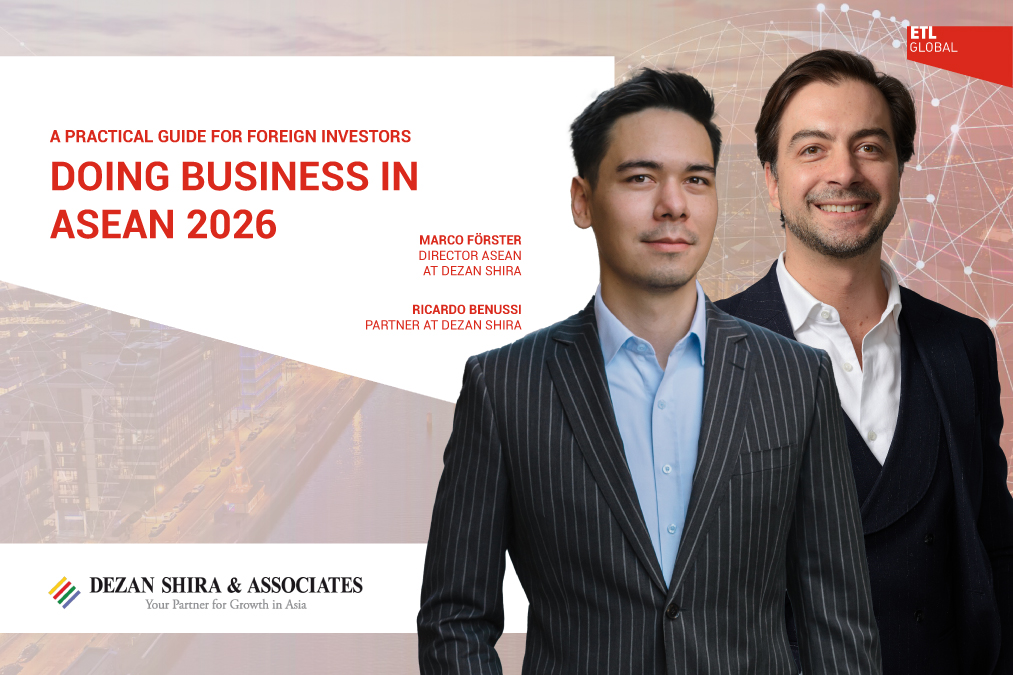
Supply chains linked to ASEAN are being tested by tougher tariff rules, closer scrutiny on origin, and higher expectations around compliance. For companies planning their next move in Southeast Asia, assumptions that worked a few years ago no longer hold and decisions made now will shape market access well into 2026 and beyond.

In An Introduction to Doing Business in ASEAN 2026, ETL GLOBAL Member Dezan Shira & Associates sets out what has changed across the region and why it matters. The guide brings together the latest regulatory updates across key ASEAN markets, with a special focus on transshipment, US tariffs, and the growing importance of verifiable value creation. It explains how new trade measures, digital customs systems, and shifting investment rules are influencing where and how foreign companies should operate in ASEAN.

Download the full guide to understand how current ASEAN regulations affect your investment strategy and to identify practical steps for building compliant, resilient operations across Southeast Asia.

ETL GLOBAL

Follow & Subscribe

SEARCH THIS BLOG

OTHER POSTS YOU CAN'T MISS

VAT in Norway: Key Points for Foreign Businesses by Aider Legal

VAT in Norway: Key Points for Foreign Businesses by Aider Legal

Norwegian VAT rules can affect foreign companies in ways that are not always clear from the outset, particularly when projects involve a mix of goods, services, or cross-border delivery. In this guide, ETL GLOBAL Member Aider Legal sets out how these rules apply in...

Subscribe to ETL GLOBAL's Newsletter

Sign up to receive weekly news of ETL GLOBAL.

You have successfully subscribed

Subscribe to ETL GLOBAL's Newsletter

Sign up to receive weekly news of ETL GLOBAL.

You have successfully subscribed

Subscribe to ETL GLOBAL's Newsletter

Sign up to receive weekly news of ETL GLOBAL.

You have successfully subscribed